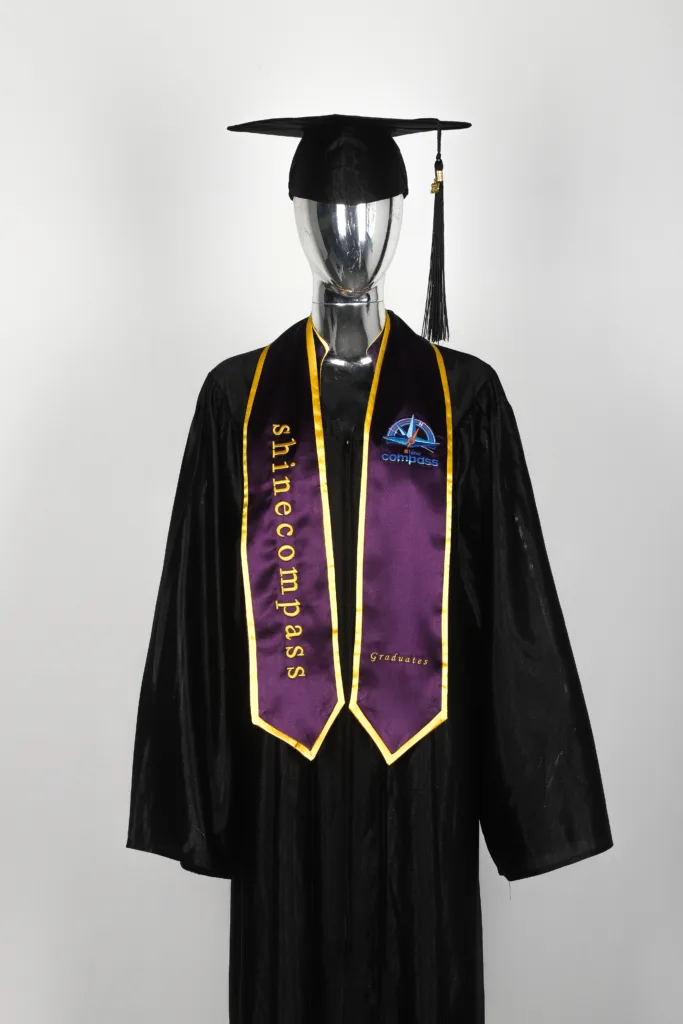
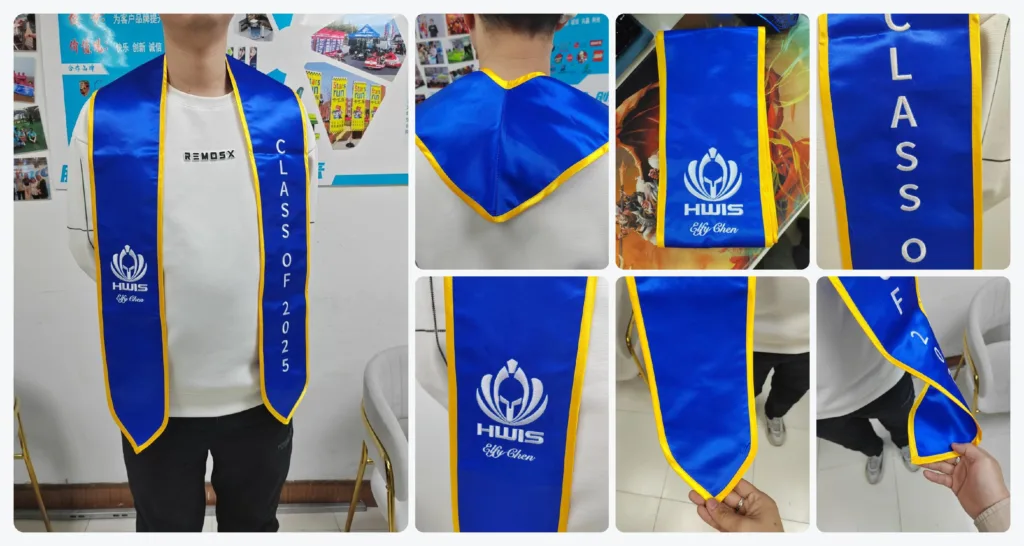
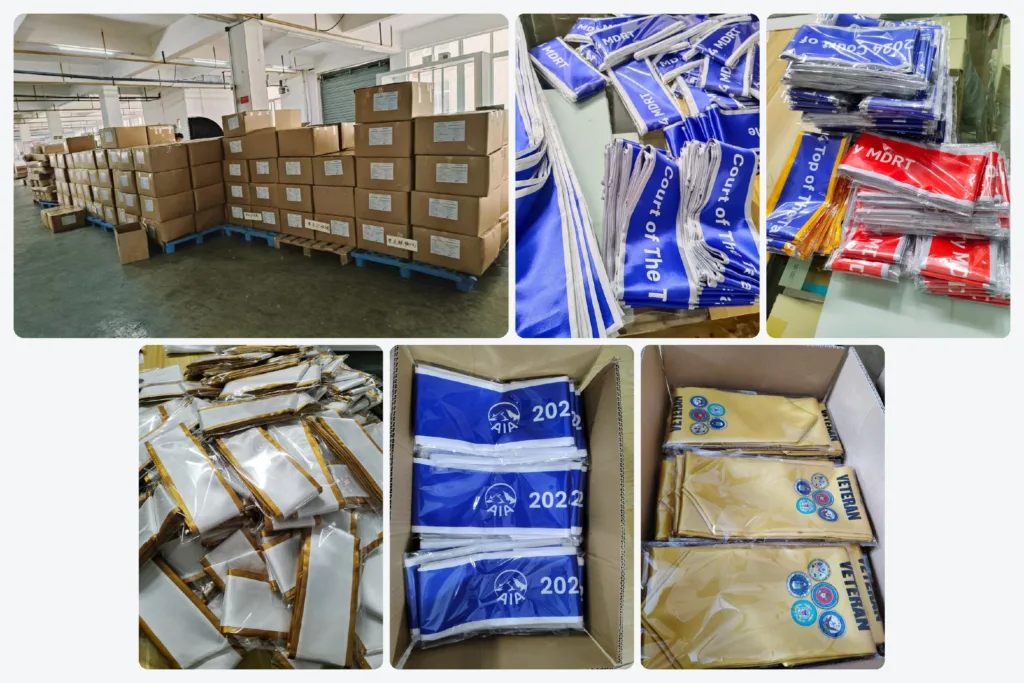
Ordering custom graduation stoles in bulk is easiest when a school treats the purchase as a small procurement project—not simply as a product order. Before requesting a quotation, define the ceremony date, quantity, stole style, artwork, approval process, delivery destination, and the person authorized to sign off on final details. This reduces avoidable delays, prevents artwork mistakes, and makes supplier quotations easier to compare fairly.
For schools, universities, graduation committees, and resellers supporting institutions, the most reliable sequence is: define the requirement, prepare artwork and quantity assumptions, compare like-for-like quotations, approve a digital proof or sample where appropriate, confirm production details in writing, and inspect the order before distribution. The checklist below explains what to prepare at each step.
Important: Custom order terms can vary by style, customization method, quantity, and delivery destination. Confirm the final specifications, sample arrangement, production schedule, payment terms, and shipping plan directly with the supplier before placing an order.
1. Start with the ceremony brief, not the product photo
A reference photo is helpful, but it is not enough for a factory to produce a consistent bulk order. The person requesting the quotation should prepare a one-page ceremony brief first. It gives the supplier the information needed to recommend a suitable stole construction and customization method.
School procurement brief: the minimum information
Item
What to define
Why it matters
Ceremony date
The fixed event date and the latest acceptable delivery date
Determines whether a sample, production, quality check, and shipment can fit the schedule.
Buyer type
School, university, department, student organization, reseller, or event organizer
Helps the supplier understand the decision process and packaging needs.
Product style
Plain, printed, embroidered, trimmed, Kente-inspired, or another specified style
Different styles require different materials, artwork preparation, and production steps.
Quantity
Expected quantity plus a small contingency amount if your policy allows it
A late quantity change can affect unit price, color allocation, and delivery planning.
Size and fit
Required length, width, adult/child sizing, and any special fit requirement
A product photo cannot reliably show finished dimensions.
Design content
School name, graduation year, logo, Greek letters, program name, colors, or individual names
Determines the artwork, printing/embroidery method, and proofing work required.
Delivery location
Full destination country, state/province, ZIP/postal code, and receiving contact
Needed for a realistic shipping proposal.
Approval owner
The person or committee with final artwork and budget approval
Prevents conflicting instructions after production preparation begins.
If your school needs a simple base product for its own branding or decoration program, review the available options for custom plain graduation stoles. If the design depends on full-color graphics or prominent text, compare this with custom printed graduation stoles before selecting the process.
2. Choose the customization method based on the design—not habit
The best method depends on the artwork, finish, budget framework, and expected use. A supplier should explain the practical differences rather than automatically recommending one option.
Customization route
Often suitable for
Questions a school should ask
Plain stole with later customization
Programs that will apply decoration separately or need a simple, classic base
What is the finished fabric, size, color availability, edge treatment, and packaging?
Printed stole
Detailed graphics, larger text coverage, color-rich designs, or event artwork
What artwork format is required? How will colors and placement be approved before production?
Embroidered stole
Text, crests, letters, or a raised decorative finish
What details will remain legible at the finished embroidery size? Is a stitch-out or digital proof available?
Trimmed or multi-color stole
Formal school colors or a more distinct visual identity
How are trim colors, seam placement, and finished dimensions confirmed?
Do not approve a method only from a low-resolution mockup. Ask the supplier to identify the finished size, placement, color reference method, and any design elements that may need adjustment for production. If the school is considering embroidery, the embroidered graduation stole product page is a useful starting point for discussing the appropriate finish and artwork details.
3. Build a quantity plan that accounts for changes
Schools often begin with a graduating-class estimate and finalize the count close to the ceremony. That is understandable, but a bulk custom order requires a clear quantity-control rule.
Before asking for a quote, document:
the current expected graduate count;
whether faculty, honorees, or student leaders receive separate styles;
whether individual personalization is required;
who can authorize a final quantity change;
whether a small overage is permitted under school policy; and
the final date after which quantity changes cannot be accepted without a revised quotation or schedule.
Ask for the quotation to show the exact quantity, style, customization scope, and packaging basis. Avoid comparing one supplier’s quote for a plain item with another supplier’s quote for a fully customized item. The lowest line-item price is not meaningful unless the specifications are the same.
4. Treat artwork approval as a formal control point
Artwork errors are among the most expensive graduation-order problems because school names, dates, graduation years, logos, and program titles are highly visible. A rushed verbal approval is not enough.
Artwork approval checklist
Before approving a digital proof or sample, verify:
school name, department name, and graduation year are spelled correctly;
logo file is the approved version and has permission for production use;
colors are identified using the school’s approved reference where available;
text, logo, and decorative elements are positioned correctly on each side;
Roman numerals, Greek letters, accents, and special characters display correctly;
required size, width, trim, and orientation are shown;
the proof identifies the version number and approval date;
the final approver confirms approval in writing;
any change after approval is documented as a revision, not an informal message.
For complex orders, request clarity on whether the supplier will provide a digital proof, a pre-production sample, or both. The right choice depends on the risk of the design and the event schedule. Do not assume that a previously used logo, an email attachment, or a product photo is automatically the final production artwork.
5. Ask quality-control questions before paying the balance
A credible custom-order process explains how the supplier verifies the finished goods. For graduation stoles, useful control points can include fabric appearance, color matching, finished dimensions, stitching, print or embroidery placement, logo/text accuracy, and final packing. The exact process should reflect the actual product and the supplier’s real operating procedure.
Ask the supplier these questions in advance:
Which product details are checked before shipment?
How will the school confirm the approved artwork version used for production?
Can the supplier provide photographs or video of the finished order before shipment?
What is the process if an observable defect or confirmed specification mismatch is found?
How are goods packed, labeled, and counted for delivery?
If the school uses a third-party inspection or forwarding agent, when and how can that be arranged?
A good quality discussion is specific. Phrases such as “high quality” or “strict inspection” are not enough by themselves; the buyer should ask what is checked and how exceptions are handled.
6. Plan backward from the ceremony date
The ceremony date is non-negotiable, so the purchase schedule should run backward from it. Build in time for internal school approvals, design revisions, sample review if needed, production, shipment, customs or receiving delays where applicable, and distribution to students.
Stage
What the school should complete
Owner
Requirement confirmation
Quantity plan, style, budget range, delivery address, and decision owner
Procurement lead / graduation committee
Supplier comparison
Like-for-like quotations, product specifications, and communication responsiveness
Procurement lead
Artwork preparation
Approved logo, wording, colors, and any personalization data
Marketing / school administration
Proof or sample approval
Written approval of the final production version
Authorized approver
Production confirmation
Final quantity, final artwork version, and agreed production plan
Procurement lead + supplier
Pre-shipment review
Finished-order photos/video, packing details, shipping information
Procurement lead / receiving team
Receiving and distribution
Count, visual check, issue recording, and student allocation
Receiving team / ceremony team
Do not publish a generic delivery promise on an internal school schedule. Instead, ask for the production and shipping plan for your actual style, quantity, customization, destination, and required date. For order-specific questions, use the Sashesmaker factory quote contact page.
7. Compare suppliers on procurement readiness, not just unit price
A lower quotation can create higher overall risk if product specifications, approval steps, quality checks, or delivery responsibility are unclear. Use a simple comparison sheet for every candidate supplier.
Comparison point
Supplier A
Supplier B
Supplier C
Product specification is written clearly
Artwork-proof process is defined
Sample policy is explained
Quality-control steps are described
Packaging and delivery information is clear
Company contact details are consistent
Quote includes assumptions and exclusions
Communication is timely and specific
This is also the beginning of supplier due diligence. A reliable supplier should be able to answer reasonable questions about its product scope, customization process, contact route, order workflow, and applicable quality checks. Schools should independently confirm the information required by their own purchasing rules.
8. Pre-order checklist: send this with the quote request
Copy and complete the following before sending an inquiry:
Organization / school:
Contact name and role:
Delivery country and postal code:
Ceremony date:
Required delivery date:
Product style:
Finished size / width requirement:
Quantity:
Colors:
Customization method requested:
Artwork attached? Yes / No / In progress
Text to include:
Logo / school color reference:
Need a digital proof? Yes / No
Need a sample? Yes / No / To be discussed
Packaging requirement:
Other procurement or receiving requirements:
Providing this information at the beginning leads to a more useful quotation and reduces back-and-forth. If some details are not yet final, say so clearly and identify the expected decision date.
Frequently Asked Questions
What information does a supplier need to quote custom graduation stoles in bulk?
At minimum: product style, quantity, artwork or design direction, delivery destination, and required delivery date. Finished dimensions, color requirements, packaging, and sample needs will improve quotation accuracy.
Should a school order a sample before a bulk order?
A sample or pre-production approval can be helpful when the design is new, visually detailed, color-sensitive, or important to a formal ceremony. Whether a sample is appropriate depends on the project timeline and the supplier’s actual policy. Confirm the sample cost, shipping, approval process, and schedule before proceeding.
How early should a school start the order process?
Start as early as practical once the ceremony date is known. The schedule must allow for design approval, possible sample review, production, shipment, receiving, and distribution. Request an order-specific plan rather than relying on a general timing claim.
What is the best way to avoid a logo or spelling error?
Use one approved artwork source, assign one final approver, request a versioned digital proof, and confirm every visible word, date, letter, color, and placement in writing before production begins.
Can custom graduation stoles be ordered for different programs or student groups?
Yes, but each variation should be listed separately: style, quantity, artwork, colors, and personalization requirements. This makes it easier to receive an accurate quotation and prevents mixing instructions between groups.
Request a quotation with a complete project brief
To receive a practical factory quotation, share your product style or reference image, quantity, artwork status, delivery country/postal code, and ceremony date. Include any sample, packaging, or school procurement requirements at the beginning. This allows the supplier to propose the appropriate customization route and confirm the next approval step without making assumptions.
 Skip to content